
Wounded Rhymes: Lykke Li’s Ritual of Power, Control, and Survival

Updated: May 13
A Waxx Lyrical Record of the Month Deep Dive into Lykke Li’s Wounded Rhymes. The story of desire, damage, and control — and the moment pop learned to endure.
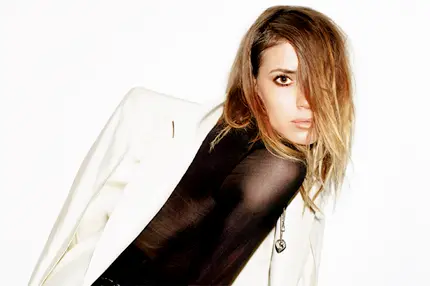
Listening to Wounded Rhymes today, you can still feel the danger Lykke Li and producer Björn Yttling were chasing — sharp, sultry, and emotionally volatile. This was never meant to be a safe second album. As Li put it at the time: “Our goal is to make a classic record — like, let’s make Neil Young’s Harvest Moon*. That’s the mission.” Wounded Rhymes Lykke Li
That mission initially announced itself loudly with ‘Get Some’ — a deliberately provocative opening salvo, built around the line “I’m a prostitute / I’m gonna get some.” It was a statement of intent, placing Li miles away from the lovelorn twee of her debut and forcing a complete perception shift in a way pop rarely allows. Released in 2011, Wounded Rhymes saw her shed the last traces of indie ingénue sweetness and step fully into her power: wounded, confrontational, magnetic.
Where her debut Youth Novels flirted with vulnerability, Wounded Rhymes weaponised it. The beats hit harder, the shadows ran deeper, and the emotional stakes became life-or-death. This wasn’t heartbreak as diary entry — it was heartbreak as ritual, as theatre, as bloodletting.
More than a sophomore statement, Wounded Rhymes was a transformation — the moment Lykke Li stopped asking for space and started taking it.
Wounded Rhymes Lykke Li
Rhythm, Restraint, and Control
By the time Lykke Li began writing Wounded Rhymes, restlessness had become fuel. The acclaim that followed Youth Novels arrived quickly, and with it came a version of herself she was already trying to move past. Rather than lean into expectations, she pulled away from them, turning inward and chasing something darker, more physical, and far less accommodating.
Li spent close to six months writing in Los Angeles, largely based in Echo Park, using the city less as a scene and more as a place of retreat. She drifted between the neighbourhood and the desert, rewatched Alejandro Jodorowsky’s The Holy Mountain, and immersed herself in Alan Lomax field recordings. The songs that emerged, she later said, felt “hypnotic, psychotic, and more primal” — less interested in atmosphere for its own sake, and more focused on direct emotional impact.
Working again with Peter Bjorn & John's Björn Yttling, Li pushed toward a sound that prioritised physicality over prettiness. Tribal percussion, pulsing basslines, and stripped, confrontational melodies form the album’s backbone. Audacious, declarative tracks sit alongside moments of emotional collapse, but nothing is softened for contrast. The minimalism is deliberate and tightly controlled — every beat chosen, every pause allowed to linger. Yttling’s role here was less about polish and more about containment — paring songs back until only their pressure points remained.
Los Angeles itself fed that tension. Li has spoken about romanticising the city through the ghosts of Joni Mitchell, Neil Young, and The Doors, while also being drawn to its contradictions: light and menace, isolation and excess. For someone already carrying a heavy internal weather system, LA offered space rather than comfort — a place where solitude sharpened focus instead of dulling it.
There is anger running through Wounded Rhymes, but it’s contained. Vulnerability appears, but never without intent. Li was clear that she wanted listeners to engage with what she was saying, not how she looked or how she was supposed to sound. The writing reflects that clarity. Nothing reaches for sympathy.
Wrapped in a vintage-leaning palette and built on repetition and restraint, Wounded Rhymes feels engineered for longevity rather than immediacy. Nothing sounds accidental. The album moves with purpose, as if every decision — rhythmic, lyrical, aesthetic — was made with the long view in mind.
Desire, Damage, and Control
What Wounded Rhymes is ultimately concerned with isn’t heartbreak in the traditional sense, but what happens to power once heartbreak has already occurred. These songs don’t document the moment of rupture so much as the aftermath — the unstable emotional terrain where desire, anger, devotion, and self-preservation begin to blur.
Li’s writing here resists the familiar arc of confession and catharsis. There is very little release. Instead, the album moves in loops and returns, revisiting emotional states until they harden into something closer to resolve. Wanting doesn’t soften anyone; it sharpens them. Vulnerability exists, but it’s managed carefully, rationed rather than surrendered.
That’s where control enters the frame. Control in Wounded Rhymes isn’t dominance or victory; it’s survival. It’s the ability to remain upright inside obsession, to speak from inside desire without being consumed by it. Even at her most exposed, Li never relinquishes authorship of the narrative. The songs are written from inside damage, not after it has been processed or healed.
Love, in this world, is rarely mutual or benign. It’s asymmetrical, pressurised, often threatening. Obsession replaces romance. Fixation replaces intimacy. Emotional attachment becomes something physical — something that moves the body, tightens the chest, demands action. This is why rhythm matters so much across the album: feeling isn’t abstract, it’s embodied.
Crucially, Wounded Rhymes refuses the language of self-pity. Sadness is acknowledged, even embraced, but never indulged. Pain isn’t aestheticised for sympathy; it’s treated as a condition to be lived inside. There’s a stoicism at work here, but it’s not cold — it’s functional. A way of staying present without dissolving.
This is also why the album feels so controlled despite its emotional volatility. The songs may seethe, circle, or threaten, but they are never out of control. Li isn’t documenting collapse; she’s charting containment. What it looks like to hold oneself together when desire and damage are pulling in opposite directions.
In that sense, Wounded Rhymes isn’t a breakup album at all. It’s an album about endurance. About the strange clarity that arrives after impact, when the damaROBYNge is already done and the only remaining question is how you move forward without erasing yourself in the process.
Track by Track — Wounded Rhymes (2011)
1. Youth Knows No Pain
A slow-burning invocation rather than a traditional opener, resetting the album’s intentions immediately. Minimal, ritualistic, and ominous, it feels like a curtain lifting on something dangerous — less a song than a summons.
Fun Fact: The song establishes the album’s physical, drum-led language before melody fully enters the frame.
For Fans Of: Fever Ray, early Zola Jesus, PJ Harvey’s darker moments.
2. I Follow Rivers
Second single, and still there isn’t a pop song that truly sounds like it. It’s the spiritual heart and unlikely classic — the track that leaps to mind most when Lykke Li’s name comes up. Obsessive, pleading, and relentless, it frames love as compulsion rather than romance, desire as something you chase even when it already knows where you live. If Wounded Rhymes was aiming for Harvest, then this is its ‘Heart of Gold’.
Fun Fact: It became a global smash after The Magician’s remix, but the original version remains definitive — colder, leaner, and far more unsettling.
For Fans Of: The Knife (melodic moments), Fever Ray (when she leans pop), early Bat for Lashes, Goldfrapp’s darker mid-period work.
3. Love Out of Lust
A masterclass in contradiction — desire curdling into emptiness. Built on a steady, almost mechanical pulse, the song moves forward without release, its tension never properly resolving. Li sings from a place of emotional exhaustion rather than collapse, letting repetition do the damage. This is the first moment on the album where heartache and yearning truly surface — echoing the river imagery that runs through Wounded Rhymes, where longing isn’t something you steer, but something that carries you whether you want it to or not.
Fun Fact: One of the few moments where the album gestures toward uplift — but it never fully arrives, leaving the song suspended in unease.
For Fans Of: Florence + The Machine (early), Bat for Lashes.
4. Unrequited Love
Utterly stirring in its stillness, built around a stark, almost 1950s girl-group guitar pluck with shoo-wops hovering at the edges. With no rhythmic safety net, Li’s voice is left completely exposed — clipped, insistent, and emotionally lopsided. Love here isn’t romantic or mutual; it’s an unbearable imbalance, a fixation turning inward, complete devastation delivered in song.
Fun Fact: One of the sparsest tracks on the album — its tension comes entirely from what’s withheld, not what’s added.
For Fans Of: The Shangri-Las, early Phil Spector girl groups, stripped-back Ronettes, doo-wop minimalism.
5. Get Some
The album’s badass mission statement and first single, delivered without a hint of flirtation. Sexual agency here isn’t inviting or playful — it’s confrontational, cold, and deliberately unsettling. Built on stomping percussion, euphoric vocals, and a sense of barely contained violence, ‘Get Some’ was a clean rupture from the image people had of Lykke Li. This isn’t fake empowerment; it’s truly power seized and held without irony.
Fun Fact: The line “I’m a prostitute / I’m gonna get some” was written to shock, but more importantly to reclaim control — forcing the listener to sit with discomfort rather than desire. It isn't about sex, but power.
For Fans Of: early Yeah Yeah Yeahs, PJ Harvey’s harsher moments, Karen O at her most feral.
6. Rich Kid Blues
Cold, almost detached — a comedown delivered with the same minimal movement and emotional distance as the album’s opener. It isn’t so much angry as disillusioned. Li sings from a place of remove, observing privilege, emptiness, and dissatisfaction without drama or release. The restraint is the point: everything is held at arm’s length, including the pain. Not a single — but it absolutely should have been.
Fun Fact: One of the album’s most understated tracks — its power comes from emotional detachment rather than confrontation.
For Fans Of: Lou Reed, Leonard Cohen, art-rock detachment.
7. Sadness Is a Blessing
The 1950s girl-group influence returns, this time anchored by a ‘Be My Baby’ drum pattern. Bearing the line that gives the album its title, this is widely considered one of Li’s greatest songs — sadness reframed not as weakness, but as initiation and companion. “Sadness is my boyfriend / Sadness I'm your girl" lands less like despair than acceptance, even resolve. And that bridge… sigh.
Fun Fact: Frequently cited by Li as central to the album’s philosophy.
For Fans Of: Sharon Van Etten, Angel Olsen, early PJ Harvey (emotional severity over softness).
8. I Know Places
A little claustrophobic and deeply inward-facing. This is a song about hiding — retreat as strategy, isolation as self-preservation. Li doesn’t dramatise the withdrawal; she inhabits it, closing ranks emotionally and sonically until there’s barely any space left to breathe.
Fun Fact: The arrangement mirrors the lyric — tight, enclosed, and deliberately unresolved.
For Fans Of: James Blake (early, internalised moments), The xx at their most minimal, Mount Kimbie’s quieter edges.
9. Jerome
A song about being deeply stuck in denial — desperately trying to hold onto something that’s already broken. It explores the pain and powerlessness of heartbreak through fixation rather than drama. As Li has explained, it isn’t necessarily about a specific person or even a single relationship. Instead, it captures the obsessive urge to regain control in a situation where control is already lost, making it one of the album’s rawest expressions of post-breakup struggle.
Fun Fact: Li has said the song isn’t aimed at “some dude,” but at the emotional state itself — denial as a form of self-trap.
For Fans Of: PJ Harvey (intensity over intimacy), Fever Ray (emotional confrontation), art-pop that prioritises feeling over polish.
Silent My Song
The closer, and the moment the record stops posing and simply bleeds. ‘Silent My Song’ opens on low, horn-like tones that feel less like melody and more like a warning siren, before the track swells and recedes around Li’s vocal in a way that’s stark and theatrical rather than “pretty.”
Lyrically, it lands a line that reads like a thesis for Li’s whole approach: turning pain into something shaped, held, almost curated. It’s the sound of someone looking straight at the wound and refusing to look away.
Fun Fact: The song contains two of the album’s most quoted lines: “You see pain like it is pleasure, like a work of art” and “You silent my song.”
For Fans Of: Scott Walker (late-era dread), PJ Harvey at her starkest, art-pop finales that feel like a reckoning rather than a release
Release, Reception, Legacy
When Wounded Rhymes landed, it somewhat split audiences — and that was exactly the point. Critics praised its boldness, its physicality, its refusal to soften the blow. Some listeners recoiled from its darkness; others recognised it immediately as the sound of an artist refusing to be boxed in.
In the early-2010s blogosphere, the record found its pulse through ‘I Follow Rivers’, which quickly became its emotional gateway. Until then, Li’s widest exposure had come via ‘Possibility’ from the Twilight: New Moon soundtrack — a pairing that made surface-level sense, even if her spirit had always leaned closer to Buffy Summers than Bella Swan. Fragile on the outside, formidable underneath. She could kick some serious butt.
Contemporary reviews in 2011 consistently highlighted the album’s physicality and restraint, positioning it as a deliberate pivot away from indie-pop vulnerability toward something harder, darker, and more confrontational. With time, Wounded Rhymes’ reputation has only sharpened. What once felt confrontational now feels prophetic — a blueprint for the emotionally raw, rhythm-driven pop that would dominate the decade that followed. It didn’t just mark a turning point for Lykke Li; it quietly redrew the map for what pop heartbreak could sound like.
In retrospect, Wounded Rhymes sits comfortably at the front edge of a decade where pop became darker, more physical, and less apologetic — a shift that would soon feel inevitable.
Collector’s Notes
Wounded Rhymes was originally released in 2011 via LL Recordings / Atlantic, with standard black vinyl pressings widely available. The original LP mirrors the album itself — lean, physical, and unadorned, with no excess framing.
For collectors, the most notable later edition is the 10th Anniversary reissue, which we featured as Record Of The Month. Housed in a warmer-toned sleeve that subtly hardens the album’s already stark aesthetic, this edition expands the scope of the era without rewriting it. It adds the Nordic bonus track ‘Made You Move’, selections from The Lost Sessions — released as early visions of three tracks — and a set of remixes, including the now-ubiquitous Magician Remix of ‘I Follow Rivers’ alongside an early contribution from Tyler, The Creator.
While these extras sit outside the album’s core narrative, they offer valuable context around the Wounded Rhymes period and Li’s creative headspace at the time.
Why It Still Matters
In the broader musical landscape of the early 2010s, Wounded Rhymes arrived slightly ahead of its moment. At a time when indie-pop still leaned toward softness or irony, Lykke Li pushed pop inward — toward rhythm, severity, and emotional control. This wasn’t maximalism or confessional excess; it was pop that tightened its grip rather than opened its arms.
In hindsight, the album sits comfortably alongside the decade’s pivot toward darker, more physical expressions of vulnerability. Its emphasis on repetition, restraint, and embodied emotion foreshadowed a wave of artists who would later approach pop less as narrative storytelling and more as atmosphere, pressure, and presence.
While Wounded Rhymes rarely gets cited directly, its fingerprints are easy to spot in the emergence of emotionally severe, rhythm-led pop throughout the decade — particularly in artists who treated heartbreak as something ritualistic rather than diaristic. The path it helped clear can be traced through the work of artists like FKA twigs, Lorde, and Billie Eilish — all of whom foregrounded control, texture, and emotional intensity over conventional pop catharsis.
At the same time, the album sits in quiet conversation with Robyn’s Body Talk era — not sonically identical, but philosophically aligned in its insistence that pop could be both physically immediate and emotionally uncompromising.
Wounded Rhymes didn’t dominate its era. It didn’t need to. Instead, it helped recalibrate what pop heartbreak could sound like — colder, heavier, more intentional — and trusted that the culture would eventually catch up.
A decade on, Wounded Rhymes still sounds severe, deliberate, and unafraid of discomfort. It doesn’t offer solace — it offers clarity. And sometimes, that’s the rarer gift.


Comments