
Hilary Duff – luck… or something: Growing Up Without the Script

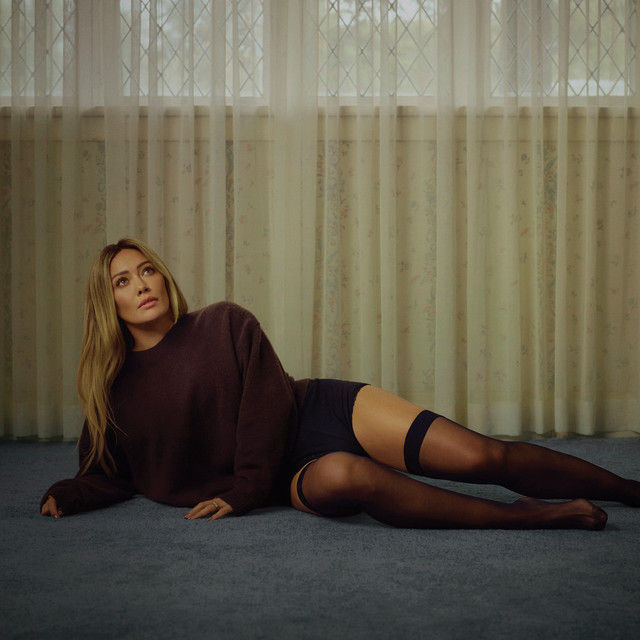
Hilary Duff - luck… or something
(Sugarmouse/Atlantic)
There was a time when Hilary Duff lived inside the glow of a television screen and shopping mall speakers, somewhere between after school and dinner, where everything felt solvable in twenty-two minutes. Lizzie McGuire wasn’t just a show, it was a mirror and a manifesto for so many of us. A place where awkwardness had charm, mistakes had soundtracks, and growing up came with outfit changes and a pop chorus waiting just around the corner. Imagine if that was our life now? Especially for Millennial Women - the whole aesthetic would provide enough dopamine to take over the world.
And then there were the songs.
“Come Clean” arrived like rain on hot pavement, that opening line still echoing like a memory you didn’t realise you kept. “So Yesterday” had that particular teenage defiance, a shrug dressed up as liberation. “Wake Up” felt like city lights and possibility, even if your world only stretched as far as your bedroom walls. I didn’t realise until recently how sad and relevant the lyrics still are today.
Those songs didn’t just play. They imprinted on us, defined our childhoods. We grew up with her.
There is something quietly disarming about Hilary Duff returning to music in 2026. Not triumphant, not nostalgic exactly. Her album “luck… or something” arrives more than a decade after her last release, written with and produced by her husband Matthew Koma, and the songs feel less like pop star reinvention and more like diary entries that learned how to dance.
Listening to Hilary Duff luck… or something now feels like opening a time capsule and finding not the glitter, but the dust it left behind. The album doesn’t try to recreate that early 2000s shimmer. It does something more interesting. It tells us what happens after and the aftermath of growing up, losing people, being an adult. It tells us about the unpolished and real things: end of love, loss of family ties, divorce, sex, doubting yourself and so many more themes that all of us live through our own timelines.
What makes the record interesting isn’t the polish. It’s the gravity of time. Duff isn’t the Disney girl from mall speakers anymore. She’s a mother, a survivor of celebrity adolescence, someone who has lived a full messy decade off-mic. The album’s title captures that strange arithmetic of adulthood: was it luck that got you here, or just endurance? Maybe both.
Across eleven tracks she circles the small, complicated knots of adulthood: relationships that quietly lose their spark, family ties that fray, the strange loneliness of being older and supposedly wiser. Songs like “Roommates” ache with the feeling of love turning domestic and dull, a memory of passion replaying against the fluorescent lighting of routine. Elsewhere, “We Don’t Talk” cracks open the painful distance between Duff and her sister, a wound she admits is one of the loneliest parts of her life.
What’s striking is how little armor the record wears. Duff doesn’t posture as a pop oracle or a glamorous tragic heroine. She writes like someone sitting cross-legged on the floor, sorting through emotional receipts from the last ten years. Sometimes it’s clumsy. Sometimes the metaphors wobble. But that’s part of the charm. The album lives in the messy middle of things, where adulthood actually happens.
“Weather for Tennis” is one of the album’s strangest and most poetic songs. The title itself feels slightly absurd, but that’s the point. It uses the imagery of clear skies and perfect conditions to talk about timing in relationships. Sometimes everything looks right on the surface, the weather is ideal, the moment seems perfect, yet something still refuses to land. The song floats on airy instrumentation, almost dream-pop in texture, giving it a weightless quality that contrasts with the emotional uncertainty underneath.
“Roommates” might be the album’s most quietly devastating moment. The song captures the slow erosion of intimacy in a long relationship, when two people who once burned for each other begin orbiting the same apartment like strangers. Duff sings about shared spaces and routines that once felt romantic but now feel mechanical, like love has been folded into laundry and grocery lists. The production mirrors that feeling: soft synths, restrained percussion, and a melody that never quite explodes. It feels domestic in the most haunting way.
Then there’s “Mature” which reads like a conversation Duff is having with her younger self. The song wrestles with the idea that growing up isn’t the cinematic transformation we imagine. Instead, maturity arrives slowly, through mistakes, awkward apologies, and the realization that you’re repeating patterns you swore you’d outgrow. Duff’s voice sits gently in the mix, almost conversational, as if she’s narrating the process of becoming an adult rather than celebrating it. It gives the track a reflective tone that feels far removed from the glossy confidence of early-2000s pop.
And then there is “We Don’t Talk.” If the album has a raw nerve, it’s here. Duff reportedly wrote the song about the distance between her and her sister(Haylie Duff). The lyrics sit in that uncomfortable emotional space where love still exists but communication has vanished. The song avoids melodrama. Instead it circles small details and memories, the kinds of fragments that linger when relationships drift apart. The production stays minimal, allowing the lyrics to carry the emotional weight. There’s something particularly heavy about sibling distance because siblings are witnesses to your earliest life. They remember the same kitchens, the same childhood bedrooms, the same versions of you that nobody else ever saw. When that relationship fractures, it can feel like losing a shared language.
I won’t mention “Growing Up”, because I want you, the reader to be surprised (if you haven’t listened to the album yet.
Taken together, these songs form the emotional spine of luck… or something. Rather than chasing big pop catharsis, Duff leans into the quieter truths of adulthood: love that changes shape, family ties that fray, and the uneasy realisation that growing up doesn’t resolve the questions we had when we were younger.
The songs are catchy, sexy and cleverly written. I absolutely immersed myself in this album and can not wait to see Hilary Duff live when she visits Australia later this year.



Comments