
Record Of The Month Deep Dives
Pixies – Doolittle: Inside the Album That Changed Alternative Rock
Ben Preece
8 Oct 2026

PIXIES – DOOLITTLE
A Waxx Lyrical Deep Dive into the record that taught alternative rock how to explode
ARTIST: Pixies
ALBUM: Doolittle
RELEASED: 17 April 1989
LABEL: 4AD
PRODUCER: Gil Norton
How Beautiful Noise Changed Alt-Rock
By the time Pixies released Doolittle in April 1989, they had already established themselves as one of the strangest and most compelling guitar bands to emerge from the American underground. What they hadn yet done was make a record this focused, this accessible, or this complete. Doolittle took the raw abrasion of Surfer Rosa and pulled it into sharper definition, without sanding away the qualities that made Pixies so singular in the first place.
That balance is undoubtedly the album’s great achievement. The songs are concise, melodic and often immediately memorable, but their surfaces are constantly unsettled by strange lyrical images, violent shifts in dynamics and arrangements that seem to resist conventional logic. Biblical stories sit beside surrealist cinema, ecological anxiety, sex, mutilation and black humour. Black Francis sings, mutters, yelps and howls. Kim Deal supplies both melodic ballast and a deadpan counterweight. Joey Santiago treats the guitar as an instrument for interruption as much as decoration, while David Lovering gives the whole thing enough structure to keep its nervous energy from collapsing into chaos.
Producer Gil Norton was crucial to that transformation. Pixies had already developed their basic vocabulary, but Norton helped refine the grammar. He pushed Francis to expand songs that might otherwise have flashed by in miniature, encouraged repetition where there had previously been resistance to it, and gave the band’s dynamics greater shape. The resulting record is cleaner than Surfer Rosa, but it is not cleaner in spirit. If anything, the clarity makes the oddness more vivid.
That is why Doolittle remains such a compelling listen. For all its historical importance, it does not sound like a monument. It sounds alive, impatient and slightly dangerous, a record constantly changing shape before you have quite worked out what it was doing in the first place. Fifteen songs arrive in a little over 38 minutes. Very few overstay their welcome. Even fewer behave.
BEFORE DOOLITTLE
Pixies formed in Boston in the mid-1980s around Charles Thompson, later Black Francis, and guitarist Joey Santiago, who had met while studying at the University of Massachusetts Amherst. Kim Deal joined after answering an advertisement seeking a bassist with an unlikely combination of musical reference points, and David Lovering completed the lineup.

Their early records arrived quickly. Come On Pilgrim introduced the band’s fractured melodic instinct in 1987, while Surfer Rosa, produced by Steve Albini the following year, made their physicality impossible to ignore. The drums sounded enormous, the guitars abrasive and exposed, and Francis’s voice frequently appeared to be fighting the songs from within.
For the next album, 4AD turned again to Gil Norton, who had already worked with the band on new versions of ‘Gigantic’ and ‘River Euphrates’. Norton’s approach was more interventionist than Albini’s. He was interested not simply in documenting the band, but in developing the songs. Francis had a natural tendency towards brevity and abruptness; Norton encouraged him to repeat, extend and arrange. The band also spent more time rehearsing the material before entering the studio, and the greater preparation is audible throughout the record.
The result was a more polished Pixies album, but not a domesticated one. Doolittle did not remove the jagged edges, but it did give them better lighting.
THE ALBUM ITSELF
1. ‘DEBASER’
There may not be a better opening song in the Pixies catalogue, or even one that sums up the band better. Francis charges in with a song inspired by Luis Buñuel and Salvador Dalí’s 1929 surrealist film Un Chien Andalou, specifically the notorious sequence involving a razor and an eyeball. It's the a perfect introduction to the way Francis writes. He is less interested in analysing surrealism than in borrowing its voltage. A strange image enters his orbit, gets turned over in his head and reappears as a pop song. ‘Debaser’ feels thrilling because the band treats all of this with absolute conviction and very little reverence.
Deal’s bass is particularly important. It does not merely support the song; it gives it swing and shape while Francis barrels over the top. Lovering has spoken about the slight push and pull between his playing and Deal’s more measured timing, and that tension gives the track some of its elastic feel.
The key word is right there in the title. Pixies were never interested in preserving beautiful things untouched. They wanted to drag them through the dirt a little.
Watch: official video
2. ‘TAME’
If ‘Debaser’ introduces the band, ‘Tame’ goes a way to explain the mechanism. This is the famous Pixies quiet-loud dynamic in one of its purest forms, but what makes it work is not the volume change itself. It is the sense of restraint beforehand. The scream only matters because the band has spent the verse refusing to give you one. And then, less than two minutes it is gone. There's no reprise, grand finale or second helping. Pixies understood economy long before anybody started calling it content strategy.
3. ‘WAVE OF MUTILATION’
The title suggests something brutal, but ‘Wave of Mutilation’ is one of the most graceful songs on the album. Santiago’s guitar seems to hover rather than attack, Deal glides through the arrangement, and Lovering’s use of mallets gives the song a soft, dreamlike pulse. The lyric was inspired by reports Francis had encountered about people driving their cars into the sea, yet the music seems almost serene. That mismatch is central to the song’s appeal. Pixies are very good at allowing lyrical darkness and melodic beauty to coexist without forcing one to explain the other. There is something faintly narcotic about it. The title is horrific, the imagery is strange, and the song feels like floating.
4. ‘I BLEED’
‘I Bleed’ is the kind of track that reveals the depth of the album because it is rarely treated as one of the obvious highlights, yet it contains almost everything Pixies do well. Deal and Francis begin in loose conversation, their voices circling each other while the rhythm section maintains a slightly uneasy pulse. Then the chorus tightens and the whole song seems to acquire sharper edges. Lovering has spoken about the difficulty of getting the drum part right, particularly the fills and the shifting dynamics. You can hear why. The song never settles into a simple groove, but it never sounds messy either. Deal is especially good here. Francis lunges and twitches; she barely appears to move. The cooler she sounds, the stranger he sounds beside her.
5. ‘HERE COMES YOUR MAN’
And then Pixies suddenly turn around and hand you one of the best guitar-pop songs of the late 1980s.
‘Here Comes Your Man’ is almost suspiciously pretty. The opening guitar figure chimes, Deal’s bass bounces, and Francis and Deal sound terrific together. The chorus feels immediate enough to suggest the song had been sitting around waiting for somebody to notice how good it was. In fact, it had. The song predated Doolittle by several years, but the band had resisted recording it because it felt too straightforward, too poppy, too easy. Which is wonderfully Pixies. Most bands spend years trying to write something this catchy. Pixies wrote one and then hid it because they were embarrassed by its manners. Its placement on Doolittle is perfect. After mutilation, blood and screaming, you get three minutes of sunshine. What is Doolittle without this song? What are Pixies without this song? Think about it.
Watch: official video
6. ‘DEAD’
But then the Bible turns up. ‘Dead’ draws on the story of David, Bathsheba and Uriah, which gives Francis exactly the sort of material he likes: desire, betrayal, violence and death already neatly packaged and waiting to be disturbed. Musically, the song is far less smooth than ‘Here Comes Your Man’. It jerks, stops and changes shape, with Norton helping the band work through sections of the arrangement during the sessions. This is where his contribution becomes especially clear. He was not smoothing Pixies out. He was helping them make their jaggedness more deliberate. ‘Dead’ sounds unstable because it is meant to.
7. ‘MONKEY GONE TO HEAVEN’
‘Monkey Gone to Heaven’ is where Doolittle becomes briefly grand. The song begins with environmental destruction and keeps widening until humanity, religion, mythology and numerology have all wandered into the same room. Francis works less like a theologian than a collage artist, bringing ideas together because the collision interests him. Then there are the numbers.
Man is five. The devil is six. God is seven. Trying to make a perfectly neat philosophical system out of this probably misses the point. Francis is not offering a thesis, he is setting off flares. The strings enlarge the song without making it respectable. If anything, they heighten the strangeness, giving the track a sense of drama that feels almost cinematic. The apocalypse, but with better arrangements.
Watch: official video
8. ‘MR. GRIEVES’
After the relative grandeur of ‘Monkey Gone to Heaven’, Doolittle immediately starts changing costumes again. ‘Mr. Grieves’ is barely two minutes long but contains enough stylistic shifts for an EP. Punk, stop-start rock, a strange little reggae lurch and several other ideas flash past before you have quite worked out which one you were listening to. This is Pixies at their most restless. Most bands introduce an idea and develop it. Pixies introduce one, become suspicious of it, throw it away and replace it with another.
There is a gleeful impatience to the whole thing.
9. ‘CRACKITY JONES’
One minute and 24 seconds. That's it! ‘Crackity Jones’ sounds like the band has suddenly been pushed down a staircase. Francis tears through the lyric, Santiago slashes away and the rhythm section hangs on.
The song draws on Francis’s time in Puerto Rico, but there is little opportunity to unpack the story because the track has almost finished by the time you start paying attention. That brevity is part of the thrill.
10. ‘LA LA LOVE YOU’
Now David Lovering gets the microphone. ‘La La Love You’ is the album’s crooked little romance, complete with whistling, flirtation and a sense that nobody involved is taking the seduction entirely seriously. Lovering had never sung lead on a Pixies recording before and later recalled being nervous enough to have several whiskies before the session. There is something endearingly awkward in the finished performance. The song works because Doolittle needs moments like this. An album full of mutilation, religion and existential weirdness benefits from letting the drummer flirt for a couple of minutes.
11. ‘NO. 13 BABY’
‘No. 13 Baby’ begins as another Francis character sketch, but the real magic happens when the song appears to have finished with words. Instead of stopping, the band settles into an extended instrumental section. Santiago circles the same idea, Deal locks into the groove, Lovering drives it forward and Francis effectively removes himself from the picture. For a band normally obsessed with brevity, the ending feels almost luxurious but nothing dramatic happens. The repetition becomes hypnotic, and for once Pixies discover that standing still can be just as effective as changing direction every fifteen seconds.
12. ‘THERE GOES MY GUN’
Another miniature. ‘There Goes My Gun’ is little more than a riff, a chant and a strange little pop instinct, but it works because Pixies understand how little a song sometimes needs. The title suggests menace, yet the performance is oddly playful.
13. ‘HEY’
Then the record slows down. ‘Hey’ might be the best example on Doolittle of the band understanding the power of space. Deal’s bass becomes the centre of gravity, Santiago plays only what he needs to, and Lovering leaves room around Francis rather than crowding him. In one of those studio stories almost too good to be true, the song was recorded live, with Francis placed in a tiny cupboard to isolate his vocal from the rest of the band. One of Pixies’ most seductive performances was made with the singer wedged into a broom cupboard. But the anecdote is only funny because the performance itself is so good. ‘Hey’ is tense without being explosive. It proves the quiet side of Pixies’ famous dynamic was never merely the setup for the loud bit.
Watch: live in the studio 1988
14. ‘SILVER’
‘Silver’ is the outlier. Slow, sparse and slightly dusty, it sounds as though Doolittle has wandered into a different landscape entirely. Francis and Deal co-wrote it, while Lovering played bass alongside the minimal percussion. There is something almost Western about the arrangement, with its 3/4 pulse and empty spaces. It is not one of the album’s most immediate tracks, and it does not need to be.
In sequencing terms, it is the strange clearing before the final song. A pause. A reset. A little desert before the knife comes back out.
15. ‘GOUGE AWAY’
Then Pixies close with Samson and Delilah. ‘Gouge Away’ turns betrayal, blindness and destruction into one of the album’s most perfect demonstrations of tension and release. The verse is restrained, Deal’s bass pulsing underneath Francis while Santiago scratches at the edges. Then the chorus opens up.
Lovering has described it as a quintessential Pixies song, and he is right. Everything is there: the biblical imagery, the melodic economy, the quiet-loud architecture and the sense that the whole thing is being held together by force of will. What makes it such a strong closer is that it does not attempt to summarise the album. It simply embodies it.
And then Doolittle is over.
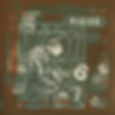
THE SLEEVE
But before you even hear Doolittle, the artwork tells you that you are entering a peculiar world.
A monkey, a halo, numbers and geometry.
The visual language created around Pixies by designer Vaughan Oliver and photographer Simon Larbalestier had already become inseparable from the music, and Doolittle pushed that relationship further. The monkey links directly to ‘Monkey Gone to Heaven’, while the numerical imagery echoes the song’s strange five-six-seven sequence. The sleeve looks almost religious without belonging to any recognisable religion, scientific without offering anything resembling science. It feels ancient and modern at the same time. If you think about it, it isn't a bad visual summary of Doolittle. The album was nearly called Whore, before Francis moved away from the title and instead took Doolittle from ‘Mr. Grieves’. A better choice.
Whore would have told you where to look.
Doolittle tells you nothing.
WHAT HAPPENED NEXT
Doolittle expanded Pixies’ audience considerably and reached No. 8 in the UK, but the band’s long-term influence would prove much larger than their immediate commercial footprint.
Bossanova followed in 1990 and Trompe le Monde in 1991. By 1993, Pixies were finished.
Then the bands they had influenced began becoming enormous.
Kurt Cobain later made no secret of Pixies’ influence on ‘Smells Like Teen Spirit’, particularly the movement between restrained verses and explosive choruses. That connection became one of the defining stories around the album’s legacy, but it is only part of the picture.
Pixies’ real influence lies in a broader permission they offered. Melody did not have to mean polish. Abrasion did not have to mean tunelessness. Weird ideas did not need to be softened before they could become memorable songs. The lesson was not simply to play quietly and then loudly. Plenty of mediocre bands learned that. The deeper lesson was that beauty and ugliness could coexist inside the same three minutes.
WHY IT STILL HITS
The danger in talking about Doolittle is that its influence can begin to overshadow the record itself. Forget Nirvana, forget the alternative-rock family tree and simply play it.
‘Debaser’ still kicks the door open. ‘Tame’ still detonates. ‘Wave of Mutilation’ still floats. ‘Here Comes Your Man’ remains ridiculously tuneful, while ‘Monkey Gone to Heaven’ still sounds like a song that should never have worked as well as it does and manages to make you feel sorry for the little guy on the cover. ‘No. 13 Baby’ gets beautifully lost inside itself, ‘Hey’ still smoulders and ‘Gouge Away’ still feels dangerous.
Across the whole album, Pixies rarely linger. The ideas come quickly and disappear before they can become overfamiliar. Some are funny, some violent, some deeply strange and some unexpectedly beautiful. Quite often they are several of those things at once.
That economy is one of the reasons Doolittle has aged so well. Nothing hangs around waiting to be admired. A riff appears, Francis throws some grotesque or surreal image across it, Deal finds exactly the bassline the song needs, Santiago makes the guitar sound faintly wrong, Lovering pushes everything forward, and before another band might have considered a second bridge, Pixies are already onto the next idea. People frequently describe Doolittle as a blueprint for alternative rock, and fair enough. But blueprints are usually orderly things. Doolittle sounds more like somebody scribbled one on the wall and left the room before anyone could ask questions.
Somehow, everybody understood it.
IF YOU LIKE…
If Doolittle gets under your skin, go backwards first. Surfer Rosa is rougher, stranger and more physical, with Steve Albini capturing Pixies before Gil Norton pulled their songs into sharper focus.
Then follow the ripples. Try The Breeders if Kim Deal is increasingly becoming your favourite person on the record. Nirvana for the most famous extension of Pixies’ dynamic violence. PJ Harvey for music where beauty and abrasion sit naturally together. Radiohead for another band that treated alternative rock as permission rather than a rulebook. Modest Mouse for twitchy guitars, unusual voices and songs that seem perpetually on the verge of falling apart. Violent Soho if looking for something closer to home.
But there is also a perfectly good chance that listening to Doolittle simply makes you want more Pixies.
In which case, put Surfer Rosa on next.